
Matt’s Story
An Interview with Andrew Castle
The Boy Who Built His Own Room
He started a company at eighteen not to change the world, but to survive it. He built it into a Sunday Times #1 Best Place to Work – and after sixteen years, walked away from the thing that saved him, to help other people find belonging and meaning in their workplace too.
Matt was fourteen, delivering newspapers seven days a week around Kingston upon Thames, when he earned his first pay packet: £15.50, in cash. Most teenagers would have spent it. He was saving for speakers and lights – kit to run the local school discos, his sister’s wedding and the fortieth-birthday parties of his parents’ friends. While other boys his age were chasing the things teenagers chase, he was quietly buying the equipment to light up other people’s celebrations. He didn’t know it yet, but he was building a business – and the only place he’d ever feel he belonged.
Because growing up Matt didn’t fit. Not at school, where – in his own words – he was neither clever nor cool. Not at home, where none of his interests matched his three siblings or parents. And not at church, where he already knew he was gay – and wouldn’t be accepted for it. Three of the central rooms of his childhood were lonely ones. “I had this deep-down thinking that I could be more,” he says. “I just didn’t have an environment to do it in. So I made my own.”
That instinct: if the room doesn’t exist, build it – became the engine of his entire life.
He’d already met a great teacher on that paper round: Mr Khan, who ran the newsagent. On Matt’s first day, Mr Khan said something he has quoted in talks ever since. He said, “Matt, if you don’t understand something, it’s because I didn’t explain it well enough – not because you’re stupid. So just ask, and I’ll explain again.” Matt pauses on it still. “A sensational example of making me feel psychologically safe.” Years before he had the language for it, he had felt what good leadership does to a person. He would spend the next twenty years trying to recreate that environment for everyone he hired.
By 2006 he was being paid to DJ. M&J Stage Productions Ltd – a company he’d formed at fifteen, too young to register in his own name – supplied the PA for a fireworks event headlined by DJ Pete Tong. The first headquarters was a garden shed from B&Q with dial-up internet and his father Ben driving him to events in the family Toyota Previa. When he told HSBC his turnover might one day reach £2,500 a year, the bank manager visibly struggled to take the number – or the teenager – seriously, and it stung enough that he still remembers it. At eighteen he founded Clownfish Events, with £20,000 from a handful of shareholders, one of whom put in his life savings.
A few months later, in that first trading year of 2009, came the booking that quietly set the course of everything since: KPMG, his first corporate client, wanted a team-building day. Matt had no idea how to deliver one. He took the job anyway and figured it out – the first time he ever built culture for someone else’s company rather than his own. “And they gave us a five star review,” he adds, clearly still a little proud of it.
Those early years had their flashes of serendipity, too. The young, unsigned Ed Sheeran once played on one of their stages – “when he was up and coming, like us”.
Most founders dress this part up. Matt doesn’t. “Lots of people say they start a business to save the world,” he says. “I started a business at eighteen to save myself.”
It nearly didn’t survive him. In 2014, everything seemed to go at once. The landlord sold the land beneath their first warehouse, and they were served notice to leave. His only salesperson left the industry. His biggest client went bust. His first mentor, Jeff, moved away. And at home, as his father’s business and mental health gave way, the family lost the house Matt was living in. One thing after another, all in the space of a year.
He held on. He secured a commercial mortgage and bought the building that would anchor Clownfish for the next decade. And slowly, he rebuilt a home of his own too – staying first with a client, then with his brother, before eventually buying his first house with his best friend and Clownfish shareholder, Alasdair, who’d been his right-hand man from the start.
Five years later, in 2019, his dad, Ben, died of cancer at fifty-nine. Matt was twenty-nine – and the man who had driven him to those first jobs in the family Previa, the man he’d looked at as a boy and wanted to become, was gone. When the pandemic hit months afterwards, grief became fuel. “I wasn’t willing to give up something I had control over,” he says, “having just given up something I had no control over.” His mantra through it: “I can’t control the waves, but I can learn to surf.”
What began in a garden shed became a multi-million-pound company – and over his sixteen-year career at Clownfish, Matt worked with some of the biggest blue-chip names in tech, finance and pharma. Hired to build their employee-engagement events and company offsites, he increasingly found himself in the boardroom with their C-suites, consulting and strategising on how global companies look after their people. He talks about the privilege and learning of being in those rooms with a child-like sparkle.
But the thing he’s proudest of was never the corporate logos. It was the team – “a team of misfits, really,” in his words. He hired for two qualities above all: kind-hearted and hungry to grow. Every year he flew the whole company to Marrakech, to Norway or on ski trips, to celebrate what they’d achieved that year. He funded performance coaches and therapy for anyone who wanted it.
And it worked – not as a slogan, but as an extraordinary retention stat. In sixteen years, not one person ever left Clownfish to join a competitor. In 2025 the company was named the Sunday Times #1 Best Place to Work – and won it again in 2026, after he’d gone. By thirty-five, he’d built Clownfish into a business estimated to be worth eight figures. And at its strongest-ever moment, he walked away.
Sitting with his board in April of 2025, he said a sentence out loud: “I’m not sure I would hire me to general manage a business to the next level”. He is quick to clarify he’d hire himself in a heartbeat – just not for that job. “And if that’s true, what the hell am I doing running this company? That’s not fair on my colleagues. It’s not fair on the business.”
There was a personal reason, too. The thing he’d built to escape the loneliness of childhood had quietly become the thing that deepened it. A therapist named what he couldn’t: the safe room he’d made at eighteen had turned into a place he could never switch off, never lower his guard, never rest. “You can only start to heal,” she told him, “once you step out of the place you built to protect yourself”.
The team didn’t want him to go. But the culture he’d embedded held firm without him – which was, in the end, the truest proof it had ever worked.
These days he lives in a spectacular house in Cobham, Surrey – complete with grand piano, swimming pool and cinema. I know, because he invited me in. He shares it with his partner, Jonny, who now runs Clownfish as managing director, and their golden retriever, Otto. Yet Matt’s quick to say the two of them were just as happy in their London flat a year ago. “The house”, he says, “isn’t the point; sharing it is”. He has a line he lives by: “If you’re lucky enough to have more than you need, build a longer table, not a higher fence”. Spend an afternoon with him and you realise that isn’t a quote he found. It’s just who he is.
So why come back to work at all – why teach? The answer was in the people he’d hired. So many of his early recruits were misfits, like him. When he gave them somewhere to belong, made them feel safe – exactly what Mr Khan had done for him behind the shop counter at fourteen – and handed them meaning, he watched them grow. Not just at work. In themselves. “I’d see someone arrive guarded and small, and a year later they’re standing taller, speaking up and flourishing,” he says. “Work did that. The right environment did that”. The room he’d built to save himself, it turned out, could save other people too – and he couldn’t unsee it. “Once you’ve watched work change a life,” he says, “you can’t go back to pretending it’s just a job”.
That’s his mission now. To teach the leaders who want to build a place like that on purpose – and to reach the colleagues stuck somewhere that’s quietly grinding them down, wondering if work is meant to feel like this.
He is careful not to present as a man who has it all figured out. “I’m a work in progress,” he says. “Messy, imperfect humans run companies and messy, imperfect humans work in companies. I work harder on myself now than I ever have.” He is not at the summit handing down wisdom. He’s likely a little further up the same mountain you’re on, turning round, reaching back a hand.
His belief, after all of it, fits in six words: work, when done right, changes lives. He spent his whole life proving it – first on himself, then on every colleague he gave a chance.
Now he wants to help you find the same thing in your work: belonging, meaning and joy.
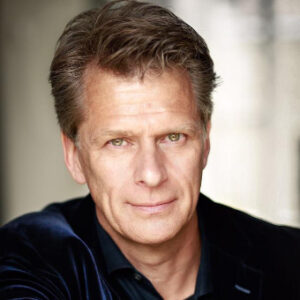 Written by Andrew Castle
Andrew is a journalist, national broadcaster and former British No. 1 tennis player.
Watch matt on youtube
Matt's First Interview after leaving Clownfish
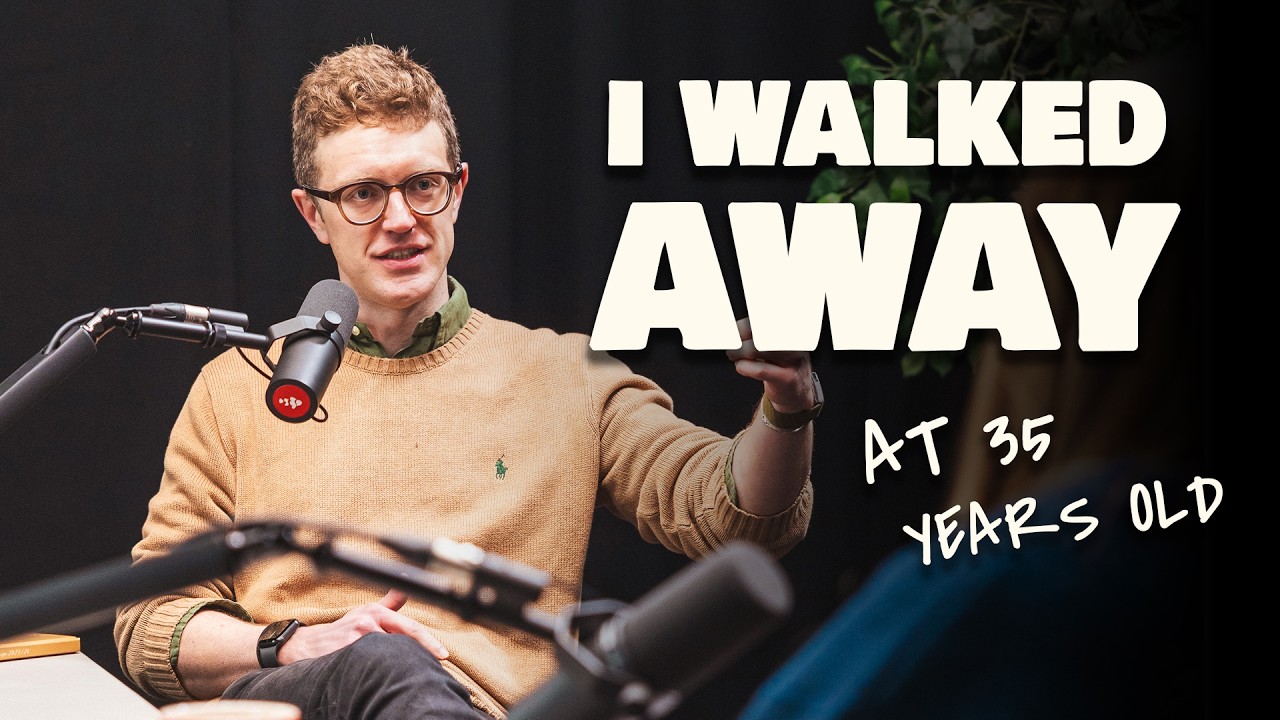
I Built a Multi-Million Pound Business… Then Walked Away at 35
Six months after stepping down, I sat down with Sara – a colleague and friend of nine years – to talk properly about the whole thing. It’s unfiltered, occasionally uncomfortable and the truest account I’ve given of why I did it and who it made me.
Introducing Matt
"When work is done right,
it has the power to change lives".
Matt built Clownfish Events into a Sunday Times #1 Best Place to Work and a multi-million pound business. Now he helps leaders build teams that flourish and businesses that fly.
One leadership tip.
In your inbox every Monday.
Unsubscribe the first time it’s not a golden nugget.